Instagram is handing users a nuclear option for their feeds. The platform's latest update, a comprehensive 'Algorithm Reset' tool, allows users to wipe their recommendation history and start from zero. For the average user, it’s a chance to escape a doom-scrolling loop of niche hobbies they no longer care about. For brand marketers and agency strategists, it’s a potential extinction event for organic reach.
By the end of this guide, you will understand how to execute a reset for testing purposes and, more importantly, how to re-engineer your brand’s content to ensure you aren't filtered out of these 'clean' feeds. You'll need an updated version of the Instagram app (version 320.0 or higher) and a clear understanding of your current engagement benchmarks before you begin.
Why it matters: When a user resets their algorithm, Instagram effectively forgets every signal your brand has spent years building. The 'Interest Graph' that previously connected your product to their screen is severed. If you aren't one of the first accounts they re-engage with, you might never reappear in their feed again.
Key takeaways
- The Reset is a Total Wipe: It clears recommendations across Explore, Reels, and the main Feed, treating the user as a brand-new account.
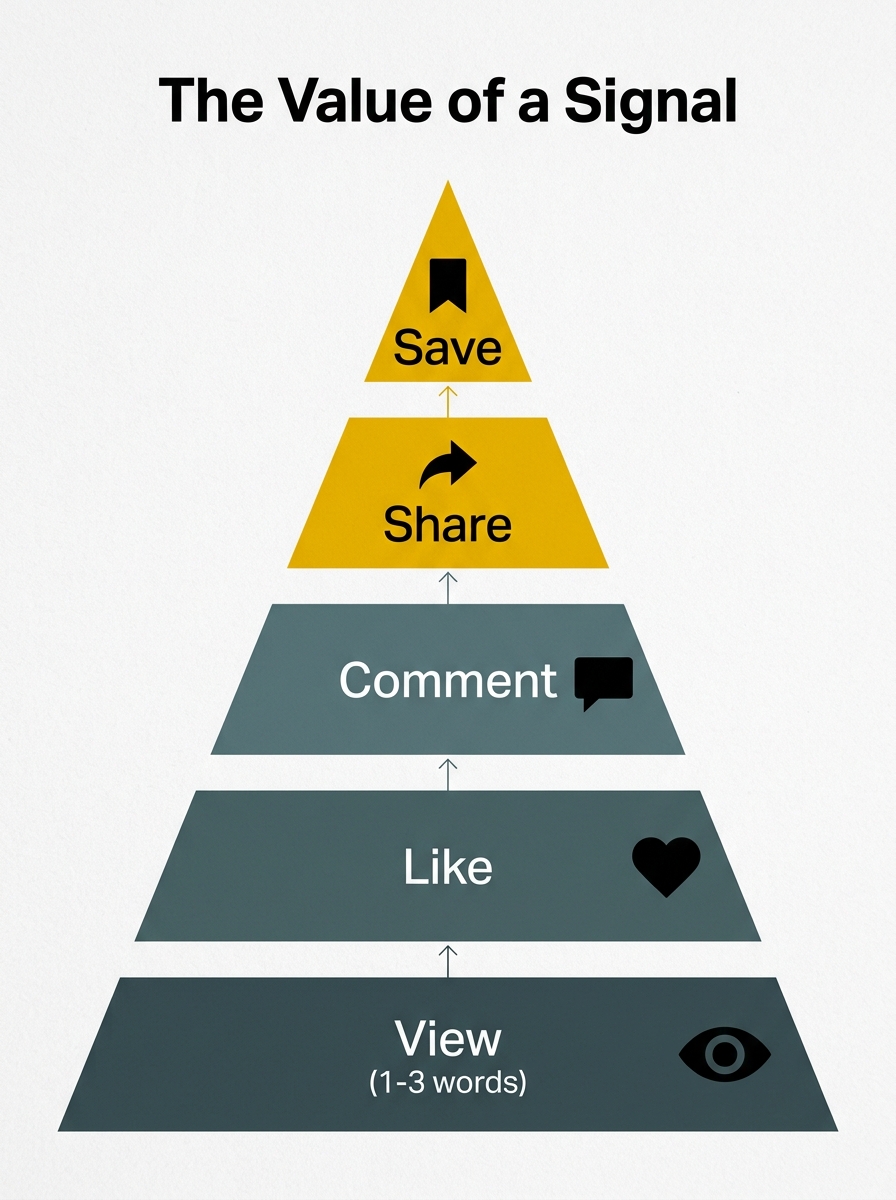
- Signals Reset: Brands must focus on 'High-Intent Signals' (saves and shares) rather than 'Passive Signals' (view time) to survive a reset.
- The 72-Hour Window: The first three days after a user resets are critical; your content must be high-value to re-establish the connection.
Step 1: Accessing the Algorithm Reset Interface
To understand the threat, you must first see the process through a user's eyes. Instagram hasn't buried this feature; they've integrated it directly into the 'Suggested Content' settings. This accessibility is what makes it dangerous for brands—it’s not a hidden power-user feature, but a prominent solution for 'feed fatigue.'
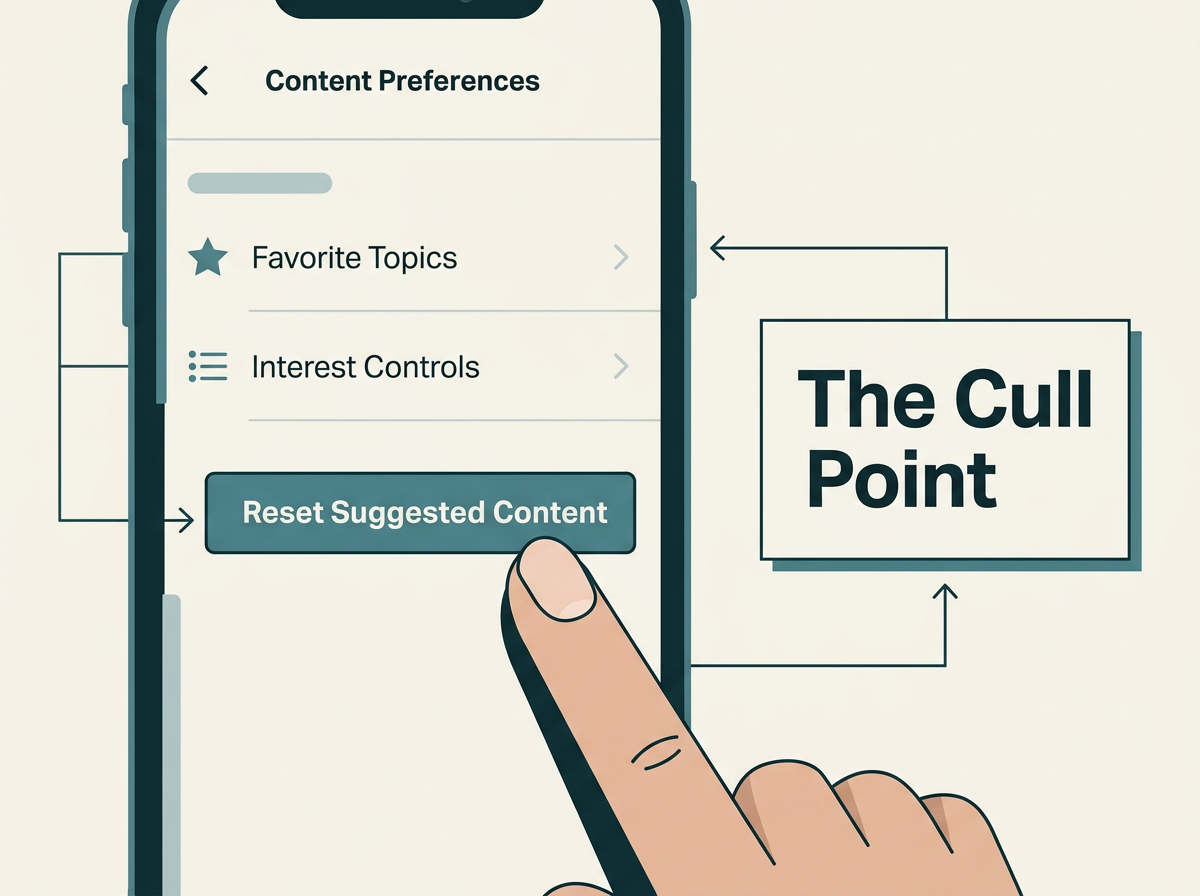
Navigate to your profile, hit the hamburger menu, and select 'Content Preferences.' From there, you will see the 'Reset Suggested Content' option. Instagram will prompt you to review the accounts you currently follow, suggesting you unfollow those that no longer serve your interests. This is the first 'cull' where brands are most at risk. If your content has felt like filler lately, this is where you lose the follower entirely.
Why it matters: This step forces a conscious audit of a user's following list. According to recent internal agency benchmarks, accounts that post more than twice a day without high engagement are 40% more likely to be unfollowed during this reset flow. The platform is actively encouraging users to trim the fat.
Common pitfall: Many marketers assume that if a user doesn't unfollow them, their reach is safe. Incorrect. Even if they stay followed, your 'priority' in their feed is reset to zero. You are now competing with every other account they follow on an equal playing field, regardless of your 5-year history with that user.
Step 2: Clearing the Recommendation Cache
Once the user confirms the reset, Instagram’s machine learning models for that specific UID are purged of recent preference data. This includes the 'Topic Clusters' the user was previously assigned to. If you were a 'Fitness Brand' appearing in a 'Fitness Enthusiast' feed, that association is gone.
From a technical perspective, the platform is moving away from purely historical data and toward real-time intent. This mirrors shifts we've seen on other platforms; for instance, after watching X’s ownership issues play out and the subsequent volatility of its ad platform, marketers are increasingly wary of any system that relies on old, static data. Instagram is following the TikTok lead—where the 'For You' page is a constant, living test of relevance.
Why it matters: Your past performance no longer guarantees future delivery. In a post-reset environment, Instagram relies on 'Cold Start' algorithms to populate the Explore page. They will show the user broadly popular content (the 'Top 1%') before narrowing back down into niches based on new interactions.
Common pitfall: Relying on 'legacy reach.' If your strategy is 'we have 1M followers so we will always get views,' the reset tool is your wake-up call. Reach is now earned in every single session, not inherited from your follower count.
Step 3: Re-Establishing High-Intent Engagement Signals
Now that the user has a blank slate, how do you get back in? You need to trigger what we call 'High-Intent Signals.' In the hierarchy of the Instagram algorithm, not all actions are equal. A 'Like' is a low-effort signal. A 'View' is often accidental. To survive a reset, you need 'Saves' and 'Shares.'
When a user saves a post or shares it to their Stories/DMs, it tells the algorithm: 'I want more of this specifically.' After a reset, Instagram is desperate for these signals to rebuild the user's profile. Brands should pivot their creative briefs to focus on 'Utility Content'—infographics, deep-dive captions, or 'how-to' videos that provide enough value to warrant a save.
Why it matters: Per the platform’s Q4 earnings and subsequent developer documentation, the weight of a 'Save' is now roughly 7x that of a 'Like' for recommendation ranking. In a 'clean' feed, one save can be the difference between staying visible or disappearing for a month.
Common pitfall: Directing users to 'Link in Bio' too early. If you move the user off-platform before they engage with the post itself, Instagram doesn't register the interest signal. You must capture the engagement on the post first to secure your spot in their new algorithm.
Step 4: Leveraging the 'New Interest' Vacuum
Immediately after a reset, the Explore page becomes a battleground. Instagram will populate it with high-performing content from a variety of categories to see what 'sticks.' This is a window of opportunity for brands to capture new audiences who may have previously been siloed into different interest buckets.
To capitalize on this, use 'Broad-to-Niche' sequencing. Start with content that has broad appeal within your industry to catch the 'Cold Start' algorithm, then follow up with niche, high-value content to lock in the interest. For example, a skincare brand might post a broad '3 Tips for Better Skin' Reel (Broad) followed by a 'Deep Dive into Niacinamide' (Niche).
Why it matters: Since Meta deprecated CrowdTangle in August, our ability to track these shifts in real-time has diminished. We now rely on 'Signal Testing'—posting varied content pillars and monitoring which ones trigger the highest 'Follow-through Rate' (users who view a Reel and then visit the profile).
Common pitfall: Changing your brand voice to chase trends. While the algorithm is looking for broad appeal, if you deviate too far from your core offering, you will attract 'low-quality' followers who will eventually reset their feeds again when your actual product content starts appearing.

Step 5: The Verification Phase—Measuring Your 'Re-Entry'
How do you know if you've successfully navigated a user's algorithm reset? You look at your 'Non-Follower Reach' percentage in Professional Dashboard. If this number is climbing while your 'Home Feed' reach remains stable, you are successfully breaking into 'reset' or 'new' feeds.
Another key metric is the 'Return Rate.' Use Instagram Insights to see how many people are viewing your content multiple times in a 7-day period. If a user resets and then sees you twice in three days, you have successfully re-indexed yourself in their personal recommendation engine.
Why it matters: This is the only way to quantify 'Algorithm Health.' Total reach is a vanity metric; 'Non-Follower Reach' is the metric of growth. If you aren't hitting at least 30% non-follower reach on your Reels, you are likely stuck in a stagnant loop that a user reset will eventually break.
Common pitfall: Ignoring the 'Account Status' tab. If you have any community guideline strikes—even minor ones—your ability to appear in 'reset' feeds is severely throttled. Instagram's 'Recommendation Guidelines' are much stricter than their 'Community Guidelines.'
Beyond the Reset: 3 Tactics to Future-Proof Your Reach
Once you’ve mastered the mechanics of the reset, you need to insulate your brand against future platform shifts. The trend is clear: users want more control, and platforms are giving it to them to avoid the 'X-style' exodus of users and advertisers.
1. The DM-First Strategy
Instagram has publicly stated that more sharing happens in DMs than in Stories or the Feed. By encouraging users to 'DM me the word GUIDE for the link,' you are triggering the highest possible engagement signal. A DM conversation is a permanent 'green light' for the algorithm to show your content to that user.
2. Community-Led Content (CLC)
Stop guessing what the algorithm wants and start asking what your community wants. Use the 'Broadcast Channels' feature to poll your most loyal followers. When they vote or react in a channel, it reinforces their interest signal, making it less likely they will feel the need to 'reset' their feed to get away from your content.
3. Diversified Attribution
Don't let Instagram be your only touchpoint. As we've seen with the rise of agentic AI—like Claude's ability to clone and deploy websites in minutes, as noted by digital marketers—the technical barriers to building your own 'owned' platforms are falling. Use Instagram to capture attention, but move that attention to an email list or a private community where an 'Algorithm Reset' button doesn't exist.
While the reset tool feels like a threat, it is actually a filter. It removes the brands that are shouting into the void and rewards those that provide genuine, repeatable value. Your job isn't to beat the algorithm; it's to be the account the user is excited to see again after they've cleared the noise.
FAQ