The era of the 'chat box' as the primary interface for marketing AI is ending. If you spent 2024 and 2025 prompting ChatGPT to write social captions or summarize PDFs, you've likely hit a ceiling. The marginal utility of another slightly-better-than-average blog post is near zero. What actually moves the needle in 2026 is execution—the ability to deploy code, manage complex asset libraries, and automate technical workflows without waiting for a developer's sprint or a freelancer's invoice.
We are seeing a massive shift toward 'agentic' AI. Unlike standard LLMs that wait for a prompt to generate text, agentic systems can use tools, browse the web, write to files, and execute code in sandbox environments. This isn't theoretical. As noted in recent industry discussions on Reddit's digital marketing communities in May 2026, practitioners are already using tools like Claude to clone entire Webflow sites and deploy them to Vercel in under ten minutes, effectively eliminating the need for front-end maintenance retainers.
Why it matters: For brand marketing leads and agency owners, agentic AI represents a fundamental shift from 'content generation' to 'production automation.' When a social media manager can deploy a custom landing page or a dynamic ad-tracking script without a Jira ticket, the cost of experimentation drops to near zero.
Key takeaways
- Execution over ideation: The value has moved from AI that 'thinks' to AI that 'does'—specifically in web deployment and data processing.
- Freelancer displacement: High-cost technical freelancers for routine Webflow, Shopify, or tracking updates are being replaced by agentic workflows.
- Claude's dominance: Anthropics's Claude 3.5 and 4.0 models have overtaken GPT-4 in coding reliability for marketing-specific deployments.
- Platform volatility: With TikTok's ownership uncertainty in 2026 and Instagram's increasingly aggressive automated moderation, the ability to build and own your own web infrastructure quickly is a survival skill.
1. Claude 3.5 Sonnet: The Unofficial Webflow Developer
Claude isn't just a chatbot; it has become the gold standard for 'one-shot' technical marketing tasks. While OpenAI's models often hallucinate code structures, Claude's ability to handle large context windows and follow strict architectural patterns makes it a formidable production tool.
In May 2026, users reported that Claude could successfully clone complex Webflow structures and prepare them for production-grade deployment on Vercel. This isn't just about copying HTML; it's about the agentic ability to understand CSS frameworks, JavaScript dependencies, and deployment protocols. For a marketing team, this means you can take a high-performing landing page, ask Claude to 'modularize' it for a different product line, and have a live URL in minutes.
How to optimize your Claude prompts for technical SEO
Best for: Small teams needing to bypass web development bottlenecks for landing pages and microsites.
2. Youxin-YATOP Integration: The Paid Social Automator
Following Youxin Technology’s $10.8 million acquisition of an 18% stake in YATOP in April 2026, the TikTok marketing landscape has seen a surge in agentic automation. YATOP isn't a creative tool; it's a performance partner that uses agentic AI to manage the 'grunt work' of TikTok's Spark Ads and creator whitelisting.
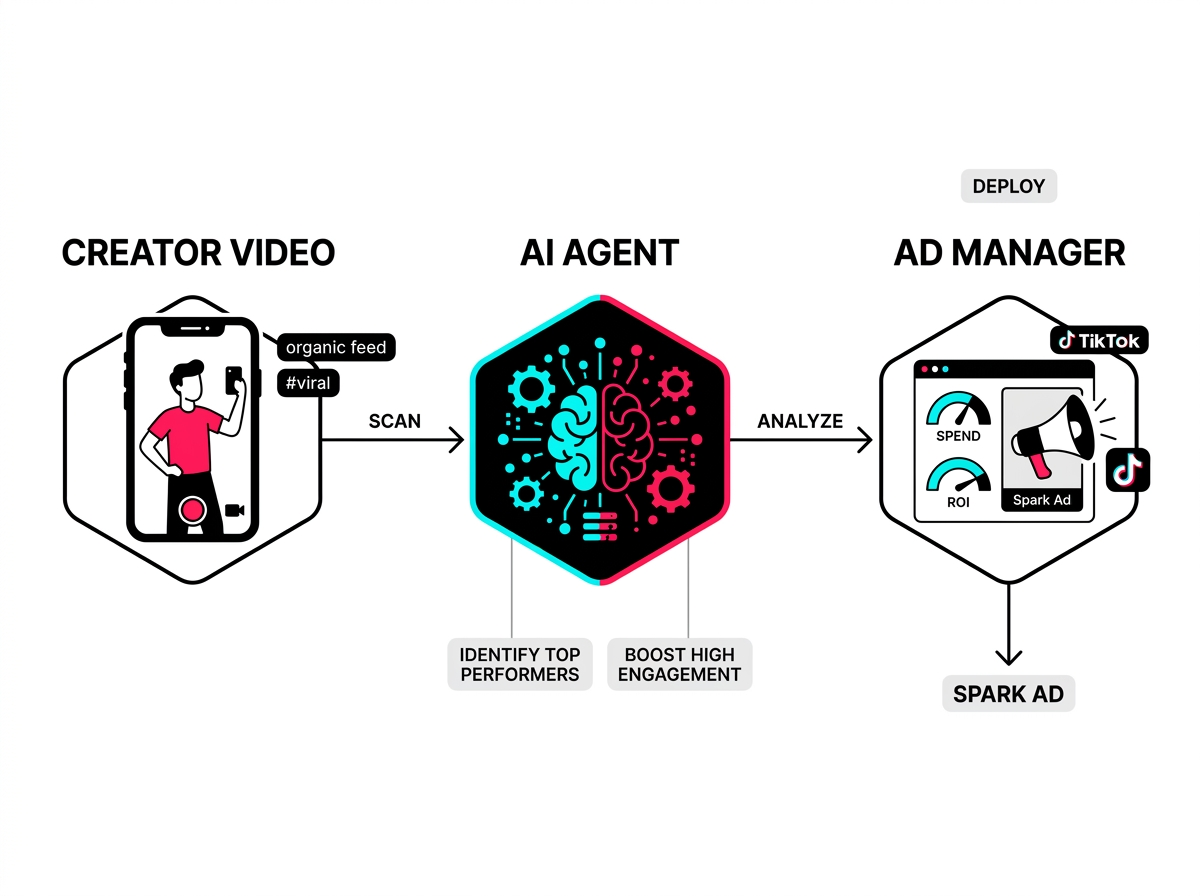
Instead of a media buyer manually checking 50 creator handles for usage rights and performance metrics, these agentic systems scan the TikTok API, identify top-performing organic content, and automatically draft the 'dark post' configurations. They negotiate the bridge between the creative asset and the ad manager, reducing the time spent in the dashboard by an estimated 40% based on early Q2 2026 benchmarks.
Best for: Performance agencies managing high-volume TikTok and Reels spend across multiple creator accounts.
3. Replit Agent: The Marketing Operations Engineer
If Claude is the developer, Replit Agent is the entire DevOps department in a browser. For marketing operations leads, the biggest hurdle is often 'glue code'—the small scripts that connect a LeadGen form to a CRM, or a social listening tool like Brandwatch to a custom Slack alert.
Replit Agent allows a non-technical marketer to describe a tool (e.g., "Build me a dashboard that pulls our daily Shopify sales and compares them against our TikTok ad spend in real-time") and then watches as the AI provisions the server, writes the Python code, and deploys the app. You aren't just getting code; you're getting a hosted, functional application. This replaces the need for expensive 'low-code' connectors that often charge by the task or data volume.
Best for: Marketing Ops managers who need custom internal tools without a six-month engineering roadmap.
4. Brandwatch Topic-Clustering: The Agentic Researcher
Social listening used to mean staring at word clouds. In 2026, Brandwatch’s agentic features move beyond simple keyword tracking. Their latest topic-clustering view uses autonomous agents to categorize millions of social conversations into 'intent buckets' without manual tagging.
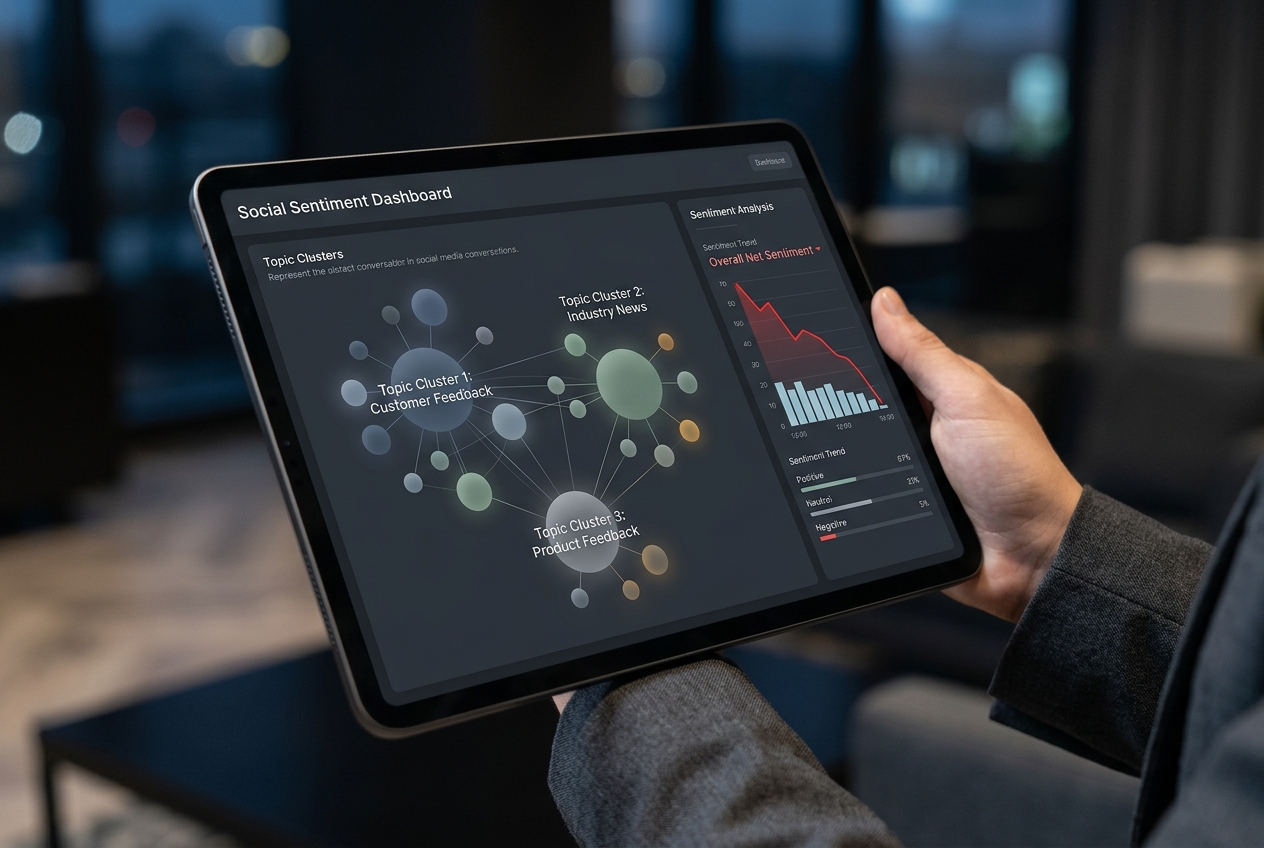
Consider the recent backlash regarding Instagram’s automated moderation—specifically the widely reported incident where a memorial video was incorrectly flagged for nudity. An agentic social listening tool doesn't just flag the 'Instagram' keyword; it identifies the sentiment shift across platforms like Reddit and X, predicts the PR risk based on historical data, and suggests a response strategy. It’s moving from 'what happened' to 'what should we do.'
Best for: PR leads and brand strategists managing reputation in volatile social environments.
5. Zapier Central: The Cross-Platform Orchestrator
Zapier Central represents the final evolution of the 'If This Then That' logic. Traditional Zaps are brittle; if a field name changes, the automation breaks. Zapier Central uses AI agents that 'understand' the data they are handling.
If you receive a customer complaint on X, the agent doesn't just forward it to Zendesk. It can check the customer's lifetime value in Shopify, look up their previous interactions in HubSpot, and draft a personalized response for a human to approve. It acts as a digital intern that has access to your entire marketing stack. This level of cross-platform orchestration is what allows a single social media manager to handle the workload that previously required a three-person customer success team.
Best for: Integrated marketing managers who need their various SaaS tools to actually talk to each other.
The Shift from 'Chatting' to 'Deploying'
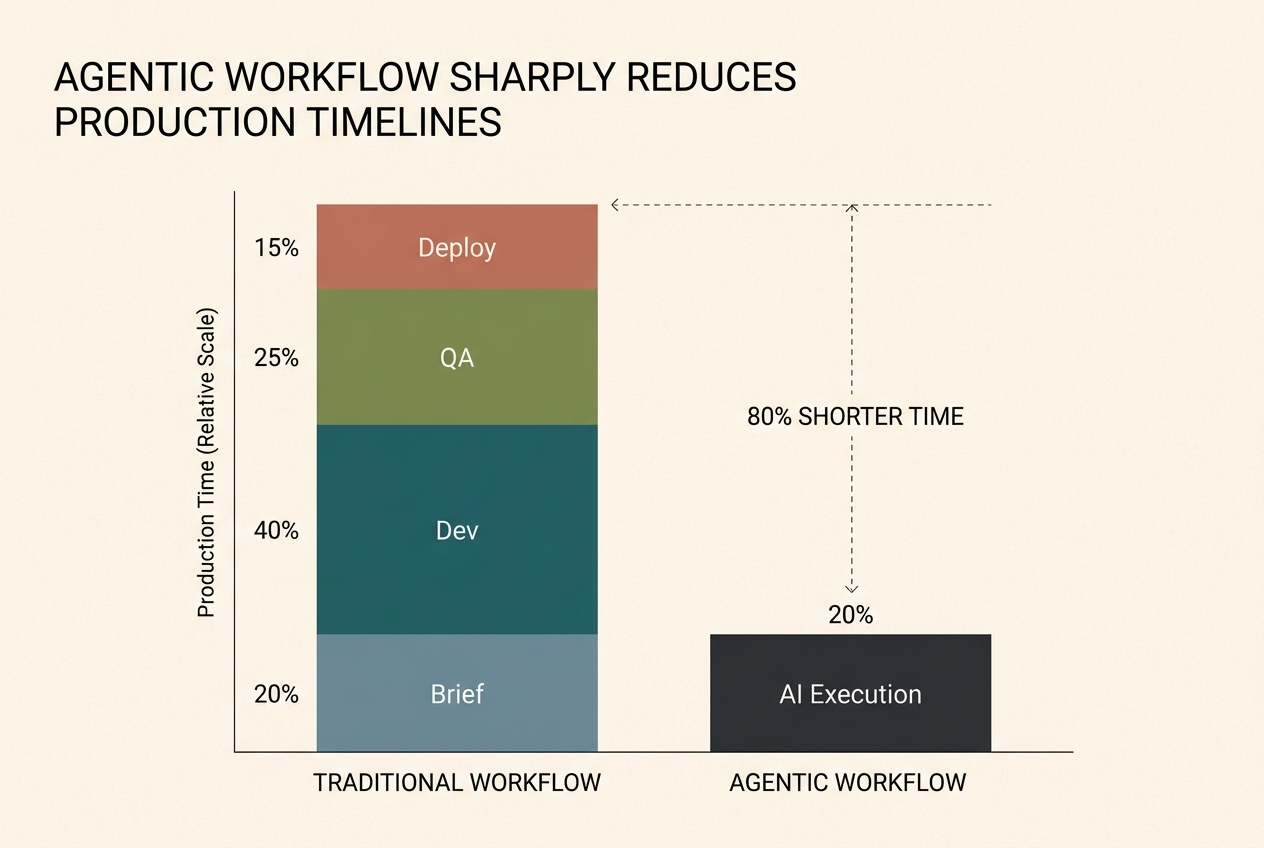
The common thread across these tools is the removal of the 'copy-paste' step. In 2024, you would generate a script in an LLM and then manually paste it into your site. In 2026, the agentic tool asks for your GitHub or Vercel credentials and does the work for you.
This shift is partly driven by the increasing instability of the major platforms. As Digiday reported in early 2026, marketers are bracing for 'TikTok whiplash' due to ongoing ownership and regulatory issues. When the platform you rely on changes its rules—or its owner—overnight, your ability to pivot your infrastructure becomes your greatest competitive advantage.
How to Audit Your Production Stack for 2026
To move toward an agentic workflow, you must first identify where your team is 'waiting.' Waiting for a developer to update a pixel, waiting for a designer to resize 50 banners, or waiting for a freelancer to fix a broken Webflow link.
- Identify the 'Glue' Tasks: List every task that involves moving data from one tool to another. These are prime candidates for Zapier Central or Replit Agent.
- Test Claude for Web Tasks: Stop hiring freelancers for basic CSS/HTML changes. Give Claude a screenshot of the issue and your source code. You will likely find it can solve the problem in one prompt.
- Monitor the Youxin-YATOP Model: Watch how TikTok partners are using AI to bridge the gap between organic content and paid spend. This is the blueprint for all social commerce moving forward.
The rise of social commerce in 2026
We are no longer in the era of 'AI-assisted' marketing. We are in the era of 'AI-executed' marketing. The practitioners who thrive won't be the best prompt engineers; they will be the best system architects—the ones who know which agents to deploy to keep the production engine running while they focus on high-level strategy.
FAQ